Showing posts with label 2013 picture book. Show all posts

Thursday, December 19, 2013

Journey by Aaron Becker


unpgd. Candlewick Press, August, 2013. 9780763660536. (Finished copy courtesy of publisher for review.)

A lonely girl, ignored by family members involved with gadgets (nod to hello, hello by Matthew Cordell) finds a red crayon, and literally opens a door to a whole new world (Hello, Harold and the purple crayon.), which she floats through in a red row boat (shades of Tuesday by David Wiesner?).

Journey celebrates the power of the imagination in richly detailed art that begs long luxurious gazing. I love how the only color in the the girl's sepia-toned world were in her decidedly low-tech playthings, scooter, kite and ball. She also seems to have a true moral compass as she does not hesitate to rescue a caged purple bird heavily guarded by intimidating armored warriors. When the bird returns the favor, and the red crayon that was lost in the fray, the two plot escape on a red carpet. The bird shows the girl a purple door, through which she finds a boy with a purple crayon and a friendship is born. 


Journey was named a NYT Best Illustrated Book of 2013; it has shown up on quite a few additional year-end "Best" lists and I expect to see it come awards season. It's a 2013 favorite of mine. Journey would be a great addition to the wordless book collection.

Friday, November 29, 2013

Old School?

Last week, I trekked to a library in my cooperative that happened to have House of Hades available on audio. While I love ILL, when I have the time, I don't mind visiting other libraries to obtain the books I want. It gives me a chance to browse other collections, check out the layout, displays and ambiance. These three books happened to be displayed next to each other and my first thought was, "How old school are these?"


There was something about them that made me think of the early days of children's publishing when the palette was distinctly limited. I grabbed all three. Here's a round-up of reviews.


Once upon a Northern Night by Jean E. Pendziwol. Illustrated by Isabelle Arsenault. unpgd. Groundwood Books, July, 2013. 9781554981380. (Borrowed from the public library.)

In a perfect pairing of picture and text, Once upon a Northern Night is a terrific bedtime story for a cold winter's night, especially if snow is in the forecast. The repetition of the title in the first line of each new verse is lulling and the imagery is vivid. The mostly black and white paintings, depicting a variety of nocturnal animals in the snowy landscape caused me to wish for a blanket and is certain to cause a young listener to snuggle a little closer. Little pops of color, such as the last of the apples on a tree, the yellow eyes of an owl, and orange fox tail, draw the eye, though I could've done without the blush on the prancing rabbits, personally. Still, a lovely addition to any library. 


Lifetime: the amazing numbers in animal lives by Lola M. Schaefer. Illustrated by Christopher Silas Neal. 40 p. Chronicle Books LLC. September, 2014. 9781452107141. (Borrowed from public library.)

There's a bit more color in this intriguing and unique concept book than the cover implies, but the feel is definitely retro as each double-page spread depicts the behavior or event that is significant in each of the eleven animals depicted. "In one lifetime, this spider will spin 1 papery egg sac." Will young readers stop to count the 200 spots on a giraffe or the 550 eggs an alligator will lay over a lifetime? Not sure, but they are definitely countable.

Pages containing expanded information about each animal, including the scientific names and average life spans extend the age range for this cross-curricular picture book. Is this a science book or a math book or a book that shows that science and math are everywhere? A page explaining what an average is follows and the volume concludes with an author's note proclaiming her love of math and ending with two word problems.


How to Hide a Lion by Helen Stephens. 32 p. Henry Holt & Company Books for Young Readers, October, 2013. 9780805098341. (Borrowed from the public library.)

For some reason, this one made me think of the Lyle Crocodile books by Bernard Waber.


I couldn't find my own copy of the book and when I retrieved this cover image online, I wondered why I thought the two were similar. Perhaps it's the incongruity of the animals as pets?

All lion wants is a hat when he strolls into town on a hot day. Unfortunately, the townsfolk aren't welcoming. They chase him and he finds refuge in a play house belonging to a girl named Iris, who wasn't afraid of lions. She sneaks him into the house because, "moms and dads can be funny about having a lion in the house," and tends to the lion. Finding the perfect hiding place proves difficult since the lion is just, "too big, too fluffy, and too heavy."

Of course, after a bit, the jig is up and poor lion is on the run again. He finds a hiding place in the middle of town where no one, not even Iris notices him. When he notices and apprehends a pair of burglars stealing the mayor's candlesticks, the townsfolk are amazed and Iris gets to say, "I told you so." Lion gets a parade and the mayor tells him that he can have anything he wants. Can you guess what lion would like?

There's a lot more color in this one compared to the other two. Perhaps the retro feel I'm getting is from the sketch-like lines or the cartoonish, yet expressive face of the lion. Whatever, this is a delightful story to share one-on-one or as a read aloud for the pre-school and lower elementary grades. 

So, is the art trending backwards or are these three just an interesting coincidence?


Saturday, November 23, 2013

The Tortoise and the Hare by Jerry Pinkney


unpgd. Little, Brown and Company, October, 2013. 978031618567. (Purchased.)

Really, after five starred reviews from all the major professional review journals, what can I add that would be new, helpful or instructive? Nothing. Except my admiration for the artist whose creative output shows no sign of diminishing. And the world is a better place for it. Knock, knock, knock. Caldecott Committee? I do hope this is on the pile to be seriously discussed come January.

Mr. Pinkney returns to Aesop for inspiration and he sets the famous race in the American southwest. As he explains in the author note, The Tortoise and the Hare was a favorite of his growing up, especially as a dyslexic child, who had extra obstacles to overcome. He also explains his reason for setting the race in the southwest. Please do not skip reading the note when you read the book. And, please reread this nearly wordless wonder more than once. 

The mixed media, graphite watercolor, colored pencil, gouache and pastel illustrations beg to be read slowly. Pore over each page and pick out details you missed in earlier readings. Notice the slow unfolding of the moral of the fable on the pages featuring the tortoise. Notice the repetition and signatory red of the new word. Curl up with a beloved little one to share this. Share it with emerging readers. Share it with ESL students of any age. Share it in middle school LA and or art class. Share it. It's a keeper.

Wednesday, November 6, 2013

Here I am by Patti Kim


Unpgd. Picture Window Books/ Capstone, September, 2013. 9781623700362. (Review copy courtesy of publisher.)

This lovely wordless picture book follows a young boy as he leaves his home country to travel on an airplane to a new city complete with a new language. The sights and sounds of the city begin to overwhelm him as soon as he arrives. By the time he gets to his new apartment, he is quite done, but remembers a small seed stowed in his pocket and takes comfort in the memory of home that seed brings. 

As the days pass, he tries to get acclimated. The signs are all a jumble of letters, school is just a jumble of bla, bla, bla. His mother tries to encourage him to get out and about in the neighborhood. But he doesn't want to - until he accidentally drops his seed and a young girl picks it up and skip-ropes away leaving the boy to run after her. As he treks after her, he begins to recognize people and places in what is becoming his new home.

The illustrations are colorful, evocative and flow beautifully from one to the other. They convey the myriad of emotions this young boy must be facing from confusion to anxiety to anger to hope and happiness. 

Perfect for language arts as well as ESL classes, the book can be used as a writing prompt or a comfort read, as many newly arrived students will see themselves in the pages. Great addition to your collection of wordless stories!


Monday, June 10, 2013

Non-Fiction Monday: Queenie: One elephant's story by Corinne Fenton


Illustrated by Peter Gouldthorpe. 24 p. Candlewick Press, June 11, 2013. 9780763663759. 

Whenever I recollect childhood visits to the Bronx Zoo when I was a kid in the 60s, I remember feeling sadness even though these animals were most impressive to view up close. 

Even though Horton Hatches an Egg is one of my favorite Dr. Seuss books, Horton's travails make me terribly sad. 

When our kids were small, my husband and I took them to see The Big Apple Circus. When the elephant was trotted out, we both turned to each other with identical looks of sadness. There's just something so wrong about such a majestic beast balancing on a beach ball let alone enclosed, far away from its natural habitat.

Queenie was born in the Indian jungle sometime in the late 1800s but hunters trapped her, tied her up, hoisted her onto a steamship and sent her to a zoo in Melbourne. In 1905, when she was estimated to be nine-years-old, she was deemed old enough to carry passengers. And so, six days a week, she would wait patiently while zoo visitors climbed a stepladder and sat in a saddle called a howdah. She was a very popular attraction and folks would wait for hours for a ride. "On some days she carried more than five hundred people." 

She seemed to have special affection for one of her keepers. Children would leave treats on the fence posts. But some children would tease her and stick pins in her trunk. She was able to exact some revenge though.

The zoo made lots of money with merchandising. Queenie posters, pencils and postcards were quite popular and her birthday was celebrated every year. 

After nearly forty years of service, Queenie accidentally killed one of her zoo keepers in 1944 and the Zoo Board decided it was too unsafe for her to continue carrying passengers. Despite thousands of letters written on behalf of the elephant, she was put to sleep in 1945 due to the food shortages during the war and the high cost of feeding Queenie.

The story ends by explaining that the Melbourne Zoo as well as most zoos around the world now provides the animals in captivity habitats similar to their native habitats. 

In merely 24 pages, using gently matter-of-fact language, the author invites the reader to reflect on the issue of animals in captivity without bashing us over the head with the message. As if the story weren't sad enough, the illustrations, though gorgeous evoke the terror of her capture and delivery to the zoo, first via cart, then ship, then truck. They are realistically painted, but left unfinished around the borders giving them action a sort of spot-lit feel. In each picture, Queenie appears stoic and dignified. They just beg the reader to linger. This one is a keeper.

Non-Fiction Monday is hosted by Practically Paradise today.

Monday, June 3, 2013

Non-Fiction Monday: Revolutionary Friends: General George Washington and the Marquis de Lafayette


by Selene Castrovilla. 40 p. Boyds Mills Press, April, 2013. 9781590788806. (Finished copy courtesy of publisher in exchange for a review.)

In July of 1777, the Marquis de Lafayette arrived in America with the express hope of meeting General George Washington and aiding the patriots' cause. He was nineteen, left his own king against orders, paid his own way to America and suffered for "fifty-four stomach-wrenching days at sea," where he brushed up on his English.

When at last he found himself in the same room as the general, he had to overcome prejudice against the previous French advisors. Still, France was a powerful ally, so Washington invited Lafayette to stay with him. Unfortunately, Washington could not get Congress to approve a commission for Lafayette even though the young soldier was eager to prove his mettle.

The two grew close. So much so that when Lafayette was injured in battle, Washington instructed the doctor to take care of him as if he were his own son.

Then, the format abruptly changes from leisurely picture book to almost an afterword, with three pages of text and spot art. This is followed by a four page timeline, pages with suggestions for places to visit and books to read and a short glossary of the French phrases that are liberally sprinkled throughout the text. The final page features a pair of portraits of the two gentlemen that hang in the U.S. House of Representatives. The folk art rendering of them bear little resemblance to the portraits. The illustrations are curiously flat. 

I'm a huge fan of picture books in the middle school social studies classes and had high hopes for this one. It's obviously meticulously researched and nearly every page features a text box in the shape of a parchment featuring a quote by Lafayette from letters home. It's almost too laden with detail to provide an impressionistic zing. Still, in the hands of a gifted teacher such as the one that teaches grade seven social studies at my school...

Sunday, March 24, 2013

Open This Little Book by Jesse Klausmeier


Illustrated by Suzy Lee. 40 p. Chronicle Books, January, 2013. 9780811867832. (Purchased.)

I'm a little late to the party with this one. Lots of great things have been written already, and I'm not so sure I have anything to add. Except, grab this little cutie and a favorite cutie of the small person variety, cozy up on a couch and dive right in. Be prepared to do it again and again.

It's a concept book, a sort of book version of nesting dolls. Someone somewhere described it as a cumulative story. Ah... not quite, but I see it. It has also been described as meta-fiction, so do add it to your pile of examples if you're a teacher. Do add it to your collection if you are an elementary school or public librarian. Do add it to your collection if you have a youngster at home. Heck, add it anyway because it's fun.

View the book trailer here. Visit the author's website here. Visit the illustrator's website here.

Other blog reviews:
100 Scope Notes
Waking Brain Cells

Monday, February 11, 2013

Non-Fiction Monday: Skit-Scat Raggedy Cat: Ella Fitzgerald


by Roxanne Orgill, illustrated by Sean Qualls. Candlewick Biographies. Candlewick Press, December, 2012. 9780763664596. (Borrowed.)

Ella Fitzgerald was poor but had a rich home life thanks to her mother's love of music. She and her sisters used to dance to her mother's records. Ella discovered that the folks of Yonkers would pay nickels to see her and her partner, Charlie dance on the street corner. She and Charlie even splurged on a trolley then train ride to the Savoy to learn new dance steps. Then, when Ella was fourteen, her mother died and she was sent to Harlem to live with her aunt, who gave little more than a roof over her head. After she ran away from an abusive situation in an orphanage, Ella lived hand-to-mouth and slept wherever a couch was offered. She lived rough. So rough that when she won a talent contest, she didn't get the week's worth of singing gigs because her clothes were dirty and so was she.

Told in prose that pops with rhythm and jazz lingo, this picture book biography is lusciously illustrated in acrylic, pencil and collage in a mostly pastel-ish palette featuring reds and rose. There's a page at the end containing suggestions for further reading, including a discography and a couple of web sites. It's even indexed. 

I'm not sure who the audience for this little treat is without it being introduced by an adult, say a language arts teacher doing a biography unit or a music teacher doing a unit on jazz. But do keep it in mind. 

Apparently, this is a reissue in a different format. It was originally published as a picture book size in 2010. Now, the trim size is smaller and taller and it's part of Candlewick Biographies. 

Monday, February 4, 2013

Non-Fiction Monday: Nic Bishop Snakes


by Nic Bishop. 48 p. Scholastic, Inc., October, 2012. 978-545206389. (Purchased.)

Full disclosure here: I cannot be objective about Nic Bishop. His books are pretty much an automatic purchase for me. The man is a god with a camera. My first Nic Bishop experience was way back in 2005. I had ordered Chameleon, Chameleon by Joy Cowley, which was photographed by Nic Bishop and chose to read it aloud to my K - 2 classes. With each reading, I came to appreciate just how ingenious this book was. It was easy to read, beautiful and contained most of the essential information about the chameleon. A quick check of the catalog revealed that I had been purchasing both Bishop and Cowley, first, as the aide at my library, then, from 2001 on, as the school librarian. I just hadn't really sat down and read any. I certainly hadn't chosen any as a read aloud. 

I pulled Red-Eyed Tree Frog off the shelf to join Chameleon, Chameleon and built a lesson for the students in grades 6 - 8.  My motto has always been, "one is never too old for picture books." And, my middle school students were rather used to me reading them a story when they arrived for their weekly class. That was the first time that I realized how hard it was to write an informational picture book for the very young and how such a project would be cool to try in middle school. To me, the ultimate synthesis of knowledge is the ability to distill and simplify it. Brilliance.

Bishop not only loaned (lent?) his photographic prowess to several Scientist in the Field books (and, we all know my love for THAT series), but branched out as author as well with his Nic Bishop series, Frogs, Butterflies, Lizards, Butterflies, Spiders and Snakes.

Each of these gorgeous volumes, boasts not only spectacular full-color photographs with several gate-folds, but at least two levels of text in addition to informative captions. Most of the photos are shown several times the actual size but all feature such incredible detail and just leap off the pages. In Snakes, the author speaks at the end about the challenges of photographing snakes in the wild and so, most of the snakes featured here were photographed in captivity. A page containing the index, a short list of further reading and short glossary concludes the book.

Visit the author's web page, nicbishop.com, for more information. And don't miss this, or any other book associated with him.


Sunday, February 3, 2013

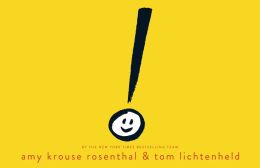
! by Amy Krouse Rosenthal & Tom Lichtenheld


56 p. Scholastic Inc., March 13, 2013. 9780545436793. Reviewed from arc obtained at ALAMW.

Poor exlamation mark, hm-m, should that be capitalized? It is, after all his name. Sadly, this isn't the punctuation dealt with in this darling new collaboration brought to us by the genius team that created Duck! Rabbit! (A book I somehow never reviewed but which I feature frequently in my "never too old for picture books" display. I even had a poster for the book. Come to think of it, I wonder where it got to after my library renovation? I digress yet again.)

Exclamation mark stands out everywhere he goes, except when he's asleep. No matter what he tries to do to fit in, "he just wasn't like everyone else........Period." 

He felt a myriad of emotions and thought about running away (hysterical illustration for this one btw) until he meets...

Question mark! Oops, ?

Question mark peppers him with, wait for it,... lots of questions! So many questions, as a matter of fact, that exclamation mark loses it and yells, "STOP!"

"He didn't know he had it in him."

Question mark helped exclamation mark find himself! The possibilities were endless!! He shared his news with his friends, period. Question mark asks them, "Isn't he something?"

They replied, "There was never any question in our minds."

Aw-w-w!

This is a must purchase folks! It's a no-brainer for elementary school libraries, but middle school libraries would do well to purchase it and school librarians should hand it over to LA teachers to spice up a lesson on punctuation. (They should also take a gander at Lichtenheld's E-Mergency!) Personally, I'm getting one for my home library as well. It's just ingenious from its design, short and wide, with, oh, what's that paper called when it's ruled with the dotted line? Ack! Can't come up with it. It's funny. It's punny. It's endearing. It's a must purchase!!!! Do the extra exclamation marks help?


I fell in love with the book when I viewed the Scholastic Librarian preview. Click on the link at right to the Picture book preview. It's the first book featured, but listen to the entire preview anyway. There are some great books in the pipeline from Scholastic. 

I found an arc at the Scholastic booth and grabbed it. Then, I was thrilled to learn that the Amy Krouse Rosenthal and Tom Lichtenheld were going to speak at the preview that I was invited to attend. There were amazing snacks and terrific original art arranged on easels all around the room to view while munching. 

Then, we listened to Sharon Dennis Wyeth read from her touching book, The Granddaughter Necklace, followed by Stephen Savage's hysterical take on the perils of sequels while describing his own sequel, with Lauren Thomson, to  Polar Bear Night, Polar Bear Morning. 

Amy and Tom finished the presentation with a wonderfully choreographed presentation about the evolution of the book. Near the end, Tom showed a slide of a cool bulletin board created by an elementary school principal who read an arc and loved it. I was just thinking, "Isn't that clever," when he added the name of this principal and I realized that I knew the guy! He was vice-principal at the elementary school in the district where I work. He was about to switch schools and come to mine, when he was offered a principal position in a nearby school, where, ironically, all the librarians were let go. He is heroically trying to fill the void.

I just had to share this "six degrees of separation" moment with the authors, so I made my way to the front of the room to share this excitement. Unfortunately, by the time I went to claim one of Scholastic's famous red gift bags, They. Were. All. Gone! I was told to email my woes to them. Fingers crossed because the bag contained finished copies of the speakers' books. Squee! I can't wait to share these gems. I will most likely send the Polar Bear book to the elementary school, but the other two fit in quite nicely into my middle school library. There was a rumor that I, Too, am America was in the bag as well.

I am a bit perplexed as to how they ran out though... crashers or greedy folks? Let it go, bk. Don't let it spoil all the excitement about the entire event, which was da bomb.


Wednesday, January 2, 2013

This is Not My Hat by Jon Klassen


Unpgd. Candlewick Press, October, 2012. 9780763655990. (Borrowed from the public library.)

A small fish (a minnow?), absconds  with a small derby, which fits him perfectly, but is clearly not his. He even admits it but he has the perfect hiding place and is making haste to get to it. Oh, how I wish I had a group of first graders to read this aloud to. They would be wiggling with delight and eager anticipation when they realize that the thief is not going to get away with his crime.

Just as in I Want My Hat Back, spare is the operative word here, in the art as well as the text. For some reason, I did not feel the love others felt for I Want My Hat Back. I liked it well enough. This one, I love. I borrowed it from the library, but may need to get a copy for myself and my middle school library, just because.